Showing posts with label Human Physiology. Show all posts

Friday, April 24, 2015

Developing Better Treatments for Depression through the Molecular Level


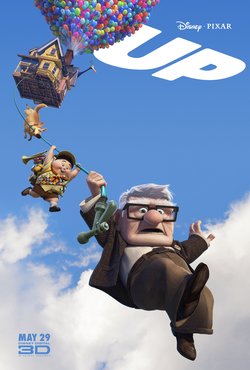
 Everyone gets sad, you may have just gotten dumped, or just watched the beginning of UP, or you may have reached the bottom your box of ice cream and still crave more. This sadness is usually fleeting though, and doesn’t change your psychology long term. However, some people struggle with depression, a serious long term psychological illness that negatively affects a person’s mood, thoughts, feelings, or sense of self-worth. Depression is a debilitating psychological illness that affects a large portion of the United States. 

http://upload.wikimedia.org/wikipedia/en/0/05/Up_%282009_film%29.jpg

The Long Term Effects of Obesity

If you are like me, then we'd probably agree that there are five major food groups: Hamburgers, French fries, pizza, ice cream, and Chipotle. Unfortunately, this kind of lifestyle is generally frowned upon, as it’s prevalence and has led to the widespread epidemic of obesity. Obesity is described as a disorder with an excessive and unhealthy amount of body fat that is usually brought on by an unhealthy diet and a lack of physical activity. America is facing a widespread epidemic of obesity, with increased levels of the disorder within the past few years. Obesity has spiked most noticeably in children, where a third of children in the United States are estimated to be overweight, 15% of which are categorized as obese.

http://www.fritolay.com/images/default-source/blue-bag-image/doritos-nacho-cheese.png?sfvrsn=2

Monday, April 6, 2015

Inactivity Changes the Brain


Have you ever wondered if spending a weekend binge-watching tv shows on Netflix is really that bad for your health? Researchers are saying that there could be actual detrimental effects in neurons as a result of leading a sedentary life.

 
https://farm2.staticflickr.com/1157/542629880_7285e8421f_o.jpg

Sunday, March 15, 2015

Laser Eye Surgery: Is it Worth it?


The number of people who have problems with their eyesight has been significantly increasing over the years. As such the extent of research in this area has been on the rise and recently there have been significant advancements made in this field.8 The idea of getting eye surgery to remove all the hassle of continually updating and wearing contacts or glasses seems to be more and more appealing. When the concept of laser eye surgery first started becoming possible scientists had no real proof of what the long-term effects could be. Now that it has become increasingly popular around the world I was wondering to what extent patients thought it was worth it, what the process is like and what, if any, risky side effects there might be. I myself don’t need to wear eyeglasses or contacts but there is a shockingly large amount of my friends and family who do. I know someone personally who has gotten the surgery a total of three times in one eye and two times in the other and yet still uses glasses to read. I also know someone who must continuously put eye drops in to prevent the dry eye symptom that came after the surgery. These two outcomes made me wonder how effective laser eye surgery really is.

Saturday, March 14, 2015

Examining Fractal Geometry to Combat Cancer Cells

The first time I heard about fractals was four years ago in my Calculus class. I remembered how fascinated I was by a pattern that is so common yet overlooked. Fractal patterns can be seen everywhere in nature--clouds, lightning, seashells, ferns, broccoli, river systems, blood vessels, and the list continues. This demonstrates how nature has specific designs with which it builds its beings and structures. And this amazes me because it shows that nature can be random and spontaneous (based on thermodynamics), but at the same time, highly systematic and organized. Fractals are simple in terms of their attributes but are varied and complex in the ideas and applications that accompany them. Salient attributes of fractals include: self-similarity, iteration and shape irregularity (Baish & Jain, 2000; Dokukin, Guz, Woodworth, & Sokolov, 2015; Losa, 2014). Self-similarity means that when one fragment of an object is examined on various scales, that fragment is similar to and "reproduce the whole object from which it is derived (Losa, 2014). Recently, fractals and the concepts related to them, which first arose in mathematics, are used to examine cell and tissue morphologies (Baish & Jain, 2000; Dokukin et al., 2015; Losa, 2014). Using fractals as an approach to studying structures in biological systems may provide new perspectives and insights on structures, and thus functions, of cells and tissues.

Friday, March 13, 2015

Molecular Mimicry: A Maladaptation of Learning

"Imitation is not just the sincerest form of flattery - it's the sincerest form of learning." - George Bernard Shaw

Generally speaking, knowledge is the pursuit of all living things. As part of the animal kingdom we educate ourselves for our survival, as do birds learning to fly or lions learning to hunt. Learning even has implications on the molecular level, with increasing evidence pointing to long-term potentiation via the regulation of AMPA and NMDA channels in the synapse. The idea here is that post-synaptic neurons in the brain physically change in response to use over time, correlating use with channel up regulation. Perhaps this is why cramming before a test is less effective than reviewing the material on a regular basis leading up to an exam.

Brain-machine interface – Science fiction or essential patient care?

We live in an increasingly technological age. From iPhone apps that allow users to track their pregnancy or menstrual cycles to alarm clocks that sense sleep patterns to wake the user feeling refreshed and invigorated, technology is becoming more and more integrated with our daily lives and health. Technology has allowed the average person to become more in touch with their biological rhythms.

Health Benefits of Sharklet Biomimetic Technology

The field of biomimetics is a growing area of engineering and innovation for health, environmental, and economic improvement. Biomimicry is the modeling and designing of new technologies after processes or physiologies that are present in nature. Currently several investigations of organism toxins, secretions, and physical properties are being done to enhance medicinal technologies. One technology that has been developed and increasingly implemented in hospital and clinical settings is the Sharklet micropattern technology.

Neck damage and its root from tablet computer usage

Over the last few years, technology has advanced greatly. Computers and smartphones now play a significant role in our everyday life. In 2014, it was estimated that 42% of US population 18 years or older possess a tablet computer. We think of these portable devices as a convenient way to stay connected with our work wherever we go. However, the potential for its use-related injury has not been evaluated until recently. While desktop manufacturers provide a guideline to set up the desktop correctly, there seems to be no manual for what the correct posture for using a tablet computer is. By investigating the head-neck postures during tablet computer usage, researchers were able to explain the correlation between owning a tablet computer and having neck/shoulder discomfort. The extensors of the neck are vulnerable to fatigue, often due to the gravitational moment of head mass during flexed postures. There were some studies that back up the relationship between flexed posture and neck pain. Most of the time, tablet computer users seem to put them in lap, which puts a lot of gravitational of head mass on their neck.

Nature vs. Nurture: Potential Physiological Differences in Adoptees

Theories of ‘nature vs. nurture’ have been debated since before the turn of the nineteenth century, but professionals have yet to come to a consensus regarding the matter.  Perhaps one of the best ways to study this phenomenon is by assessing and analyzing adoptees.  If either nature or nurture were to have a distinguishably significant impact on character development, the changes would be most evident in individuals who were raised by people other than their biological parents, allowing for the separation of genetic and environmental factors in the evaluation of their impact.

Looking into the Future: My Spine Surgery


I have moderate scoliosis, a curvature of the spine. Fortunately for me, my curve is S-shaped and both curves are balanced. This means that I stand upright, my movement and everyday life is not affected (aside from back pain) and you wouldn’t be able to tell that I have the condition if you saw me out buying a coffee. However others with scoliosis are not so lucky and surgery is an unavoidable path that they must trudge, in order to improve their quality of life.

But what does spine surgery look like? Many surgeries involve fusing the vertebrae of the spine around the area affected, or inserting rods and screws, as seen in Figure 1. Surgeries are highly invasive and can require extensive recovery periods, with original flexibility near impossible to regain in some cases.


Fig 1. University of Utah Hospital, Radiology Department. X-ray of U.S. girl, age 16 years 10 months, with post-operative scoliosis. Front, standing, clothed. 5 February 2010. X-Ray Image. Wikimedia Commons. Web. 12 Mar. 2015.

Is Running a Marathon Healthy?

Many people turn to physical exercise, such as running, to increase their cardiovascular and overall health. It seems to be common sense that running must be healthy—in fact, it is beneficial to nearly every biological structure and function in the human body. Running burns calories and builds muscle, helping exercisers maintain healthy body weights. Running releases chemicals in the brain that improve mood. Running even prevents diseases, such as diabetes and heart attacks, and extends life expectancy.  

What You Don't Know About Underage Drinking


Underage drinking is very common along with binge drinking, especially on college campuses, but for minors consuming alcohol the biggest concern might not be getting caught. Everyone who participates in underage drinking knows the risks that come with it: getting in trouble with the law, with your parents, or with your friends. But we may be ignoring one of the greatest, the long-term detrimental effects of teenage alcohol consumption. During adolescence the human brain is not yet fully developed and particularly susceptible to external influences, in particular drugs and alcohol. A study by Wanette Vargas et al. used rat models to show that adolescence drinking can have serious effects on your brain and subsequent performance.

Cannabis: Is it ok or Not? I Can’t Seem to Remember…


The world of legal recreational cannabis has many people worried about how safe this drug can be. Many claim that since it is natural it cannot be as harmful as other drugs as well as providing other claims as to its safety. However, a new study by a group of researchers at Northwestern University seeks to demonstrate that there are some negative effects of cannabis use in adolescents that mimic changes in the brain that are similar to schizophrenia especially with their effects on memory.

Is it in Your Genes: Post-Traumatic Stress Disorder

Post-Traumatic Stress Disorder. <http://paradigmmalibu.com/teen-post-traumatic-stress-disorder>
Since October 2001, approximately 1.7 million U.S. troops have deployed as part of Operation Enduring Freedom (OEF; Afghanistan) and Operation Iraqi Freedom (OIF; Iraq). The deployment pace in these recent conflicts is unprecedented, with more service members deployed for longer periods of time. At the same time, advances in both medical science and military technology have dramatically reduced casualty rates of killed or wounded.1 This means more service members are surviving experiences that would have led to death in the earlier prolonged wars, such as Vietnam and Korea War. Casualties of a different kind have emerged, however - invisible wounds such as post-traumatic stress disorder.

Putting the Pieces Together: New Autism Research Development

Recently, researchers at San Diego State University researchers may have decided the winner of an ongoing battle between competing theories of autism spectrum disorder. This disorder, often referred to simply as autism, actually describes a wide range of individuals with social deficits communication problems and repetitive behaviors . Autism has puzzled researchers since Leo Kanner first described it in 19431. Most individuals with autism have normal IQ’s and extremely variable levels of social deficits2. These social deficits can range from the inability to use and understand language at all, to having trouble holding reciprocal conversations with others. While there are countless theories as to what causes the social deficits in autism, two are emerging as frontrunners.


Children with autism often prefer to play alone instead of with other children.
Photo from Simons Foundation Autism Research Initiative

Thursday, March 12, 2015

The Reality and the Imaginary: De novo mutations in Schizophrenia and it's connection to other mental disorders


Distinguishing between the reality and imaginary is something most healthy humans can do without much of an issue. However, schizophrenia is a harmful mental disorder where an individual often has trouble with this distinction. As an example, one schizophrenic was asked to draw a self portrait, and this is what he drew:


Always Remember, Never Forget: Fear Memory Retrieval and Conditioning

 Let’s suppose that you are strolling through a park on a Saturday afternoon. All goes well until a mountain lion pounces out of the bushes and stares you right in the eye as it salivates for some human flesh. What would you do?
            Naturally, when you encounter danger, it’s only natural to feel afraid. In this instance, you are very afraid of the mountain lion standing 8 feet away from you, and in response to this fear, your body induces a “fight or flight” response as it prepares to defend itself against danger or avoid it. When this “fight or flight” response takes effect, you decide to slowly inch for way toward the grocery store just across the street, hoping that the cougar will remain calm. Luckily, a park patrol comes around in his scooter and tranquilizes the animal before it is able to react, and you are able to avoid the danger posed by the presence of this mountain lion in the park.

Eating Disorders: The Method behind the Madness

When faced with stress, especially in college, many students develop different coping mechanisms, both good and bad. While some people release steam by going to the gym, hanging with friends, and napping, others develop unhealthy habits such as binge drinking and eating disorders in the attempt to fight off the stress in their lives. Because of the noticeably strong correlation specifically between stress and eating disorders such as anorexia and bulimia, researchers have begun to look for physiological and psychological explanations as to why people, girls in particular, turn to harmful eating-related behaviors to counteract stressful situations.


3D Printing: Creating Models and Organs


Every year the amount of organ transplants needed increases, but the amount of organs donated has no means of keeping up with this ever increasing number. One solution that has been proposed is bioprinting. Bioprinting is defined as the 3-D printing of biological tissues through layering. For now the goal is to be able to print a few strips at a time to repair organs such as the liver and kidneys. In the future when proper printing methods are devised, the implications of it’s usage knows no bounds.